What is Flash USDT and How Does the New Method on ChainIDE Work
· based on the channel Rca FastPrint
Key takeaways
- Flash USDT involves creating or interacting with USDT-like ERC20 tokens via smart contracts.
- ChainIDE is a development environment used to code, test, and deploy Flash USDT smart contracts.
- Integration with MetaMask allows wallet management and contract interaction on Ethereum network.
- The method includes steps for setting up the smart contract, verifying code, and avoiding common mistakes.
- Flash USDT is intended for educational and testing purposes, not real fund transfers without verification.
Flash USDT is a method to create or interact with USDT-like tokens on the Ethereum blockchain, using a new approach demonstrated on ChainIDE. This method involves developing ERC20 smart contracts, connecting them with MetaMask wallets, and managing transactions within a controlled environment. More details and registration are available on ChainIDE's official website.
What is Flash USDT and Why is it Important
Flash USDT refers to tokens mimicking the popular USDT stablecoin, created or manipulated through smart contracts for testing, development, or experimental purposes. The new method leverages ChainIDE, an online integrated development environment tailored for blockchain projects, to streamline token creation and interaction without deploying on the mainnet initially. This approach helps developers understand USDT token structure and behavior in a safe and replicable way.
Setting up ChainIDE for Flash USDT Development
ChainIDE offers a user-friendly interface for coding Solidity smart contracts, compiling, deploying, and testing them on Ethereum test networks. To start with Flash USDT:
- Register or log in at https://chainide.com/.
- Create a new Solidity project or import existing scripts.
- Use the provided Flash USDT script from https://sites.google.com/view/defiflashusdt to build the token contract.
- Compile the code to check for errors.
- Deploy the contract on a testnet or local blockchain simulator.
This setup allows developers to experiment with token parameters, including total supply, decimals, and transfer functions, replicating USDT functionality.
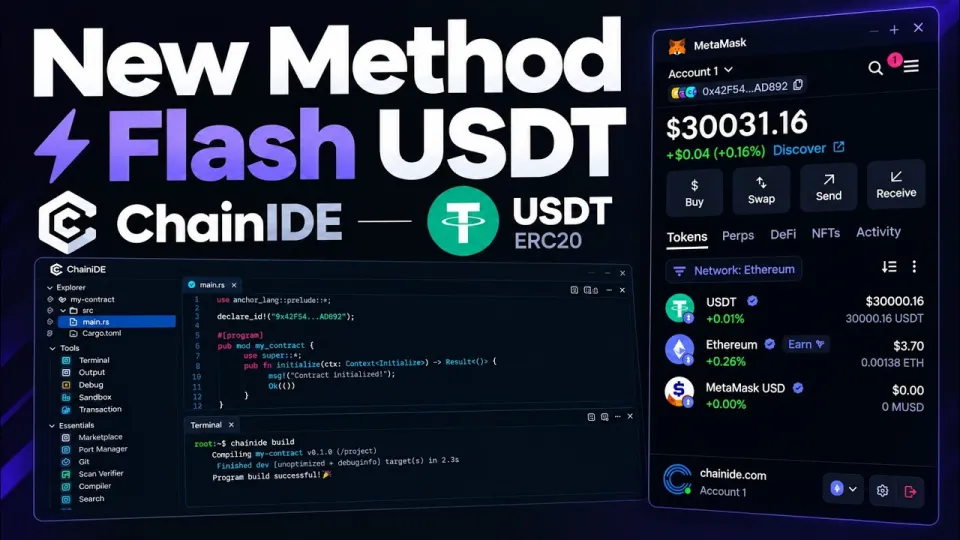
Video: Flash USDT | Found a NEW Method on ChainIDE
Understanding ERC20 Token Structure in Flash USDT
Flash USDT tokens adhere to the ERC20 standard, which defines a common interface for fungible tokens on Ethereum. Key components include:
- Total Supply: The maximum number of tokens minted.
- Balance Management: Tracking token holdings per address.
- Transfer Functions: Allowing token movement between wallets.
- Approval and Allowance: Permitting delegated transfers.
The smart contract written in Solidity includes these elements, enabling Flash USDT tokens to behave similarly to official USDT, but within a controlled test environment.
Connecting MetaMask and Interacting with Flash USDT
MetaMask serves as the wallet interface to manage Ethereum accounts and interact with deployed smart contracts. To use Flash USDT tokens:
- Install MetaMask browser extension.
- Connect MetaMask to the Ethereum test network used in ChainIDE.
- Import or create accounts as needed.
- Add the deployed Flash USDT contract address to MetaMask as a custom token.
- Use MetaMask’s interface to send, receive, and approve token transfers.
This integration enables hands-on experience with token transactions and contract calls without risking real funds.
Testing, Verifying, and Common Pitfalls in Flash USDT Usage
Testing Flash USDT contracts involves:
- Verifying the source code matches the deployed contract.
- Confirming the contract address and network are correct in MetaMask.
- Checking transaction details before signing, to avoid unintended consequences.
- Avoiding sending real funds to unverified or unknown contracts.
Common mistakes include typos in contract addresses, misconfigured network settings, and interacting with malicious or incomplete code. Proper verification and cautious testing are essential.
Useful Links
Итог
Flash USDT offers a practical way to explore and develop ERC20 token contracts mimicking USDT on Ethereum testnets using ChainIDE and MetaMask. This new method simplifies smart-contract workflows, token management, and interaction in a secure environment, ideal for developers and learners. Always ensure safety by verifying contract code and network details before any real fund usage. The channel "Rca FastPrint" provides a comprehensive breakdown of this method, supporting educational growth in DeFi and blockchain programming. For hands-on experience, visit ChainIDE and start experimenting today.
Source: Flash USDT | Found a NEW Method on ChainIDE · Markdown version
Questions & answers
What is Flash USDT exactly?
Flash USDT is a method of creating or interacting with USDT-like ERC20 tokens on Ethereum for educational or testing purposes using smart contracts.
How does ChainIDE help with Flash USDT?
ChainIDE provides an online environment to develop, compile, deploy, and test smart contracts, making it easier to create and manage Flash USDT tokens.
Can I use Flash USDT tokens in my MetaMask wallet?
Yes, after deploying the Flash USDT contract on a testnet, you can add the token address to MetaMask to interact with the tokens safely.
Is Flash USDT safe to use with real funds?
No, Flash USDT is intended for development and testing only. Do not send real funds to unknown contracts without thorough verification.